Mortgage affordability calculator
How much house can I afford?
Our home affordability calculator estimates the maximum home you can afford – including taxes, PMI, and real-time mortgage rates – based on your income, assets, and monthly debts. Enter your info to find out how much you can afford!
Home affordability calculator
Buying a home is an exciting milestone in anyone’s life, but determining how much house you can afford can be a daunting task. With so many factors to consider, it’s crucial to have the right tools and information at your disposal.
That’s where a home affordability calculator comes in handy. This powerful tool takes into account your financial situation, income, debt, and other key factors to help you determine how much you can afford to spend on a new home.
Let’s explore how our home affordability calculator works, what factors determine how much house you can afford, and how lenders evaluate your financial situation. Whether you’re a first-time homebuyer or looking to upgrade, understanding your financial limits is essential to make a smart purchase decision.
When it comes to determining how much house you can afford, using a home affordability calculator is a great place to start. This tool allows you to input information about your income, debt, and expenses to calculate an estimate of how much you can borrow for a home purchase.
How does a home affordability calculator help me?
By using a home affordability calculator, you can understand your estimated housing budget, evaluate different financial scenarios, and plan for homeownership within your means.
Factors that affect your current mortgage rate
Determining how much house you can afford involves considering several important factors. These factors include upfront costs, income, debt-to-income ratio, credit score, down payment, and your interest rate. Understanding how these factors impact your affordability can help you make a more informed decision about how much home you can comfortably afford.
Upfront costs v. monthly costs
When determining how much house you can afford, it’s important to consider both upfront costs and monthly expenses. Upfront costs refer to expenses you pay at the time of purchase, while monthly costs are ongoing expenses that you’ll need to budget for.
Here’s how upfront costs compare to monthly costs:
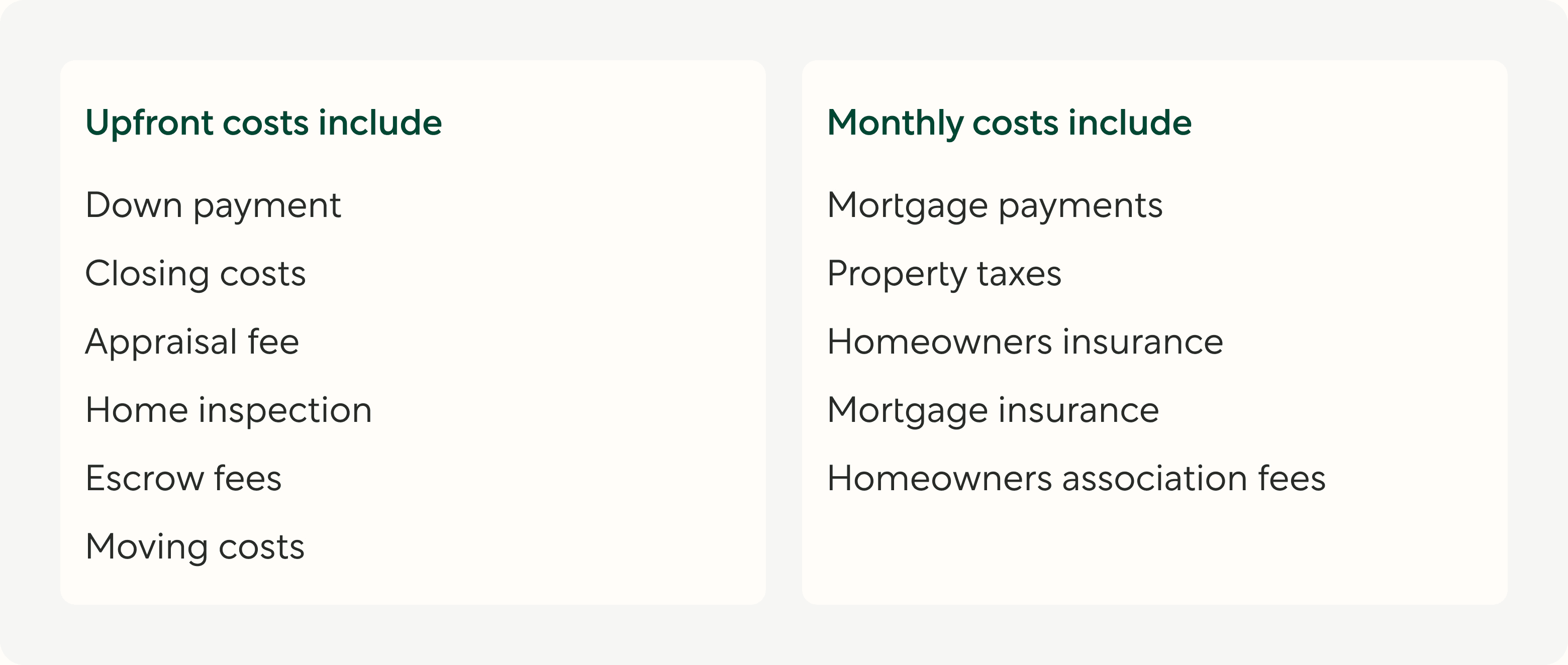
Balancing upfront costs with monthly expenses is crucial in determining how much house you can afford. While you may be able to cover the upfront costs, ensuring that the monthly expenses fit within your budget is equally important.
Income
Your income plays a significant role in determining how much house you can afford. Lenders figure out your debt-to-income ratio by looking at how much of your income goes towards paying off debts. They use your monthly income, also called gross monthly income. Here’s how income impacts affordability:
Higher income:
Allows for a higher debt-to-income ratio
Provides more budgetary flexibility for mortgage payments
May make it easier to afford a higher-priced home
Lower income:
Limits the amount you can borrow
Requires careful budgeting to ensure mortgage payments fit within your budget
Ultimately, having enough income is crucial for comfortably affording a home without financial strain. Lenders evaluate income to ensure mortgage payments are manageable and do not exceed a certain percentage of your monthly income.
Debt-to-income ratio
Debt-to-income ratio, a crucial factor in determining your home affordability, compares your total monthly debt to your gross income. This ratio is used by mortgage lenders to assess your ability to manage monthly payments. By including all monthly debt obligations like credit card payments, car payments, and student loans, this ratio provides a clear picture of your financial situation.
A lower debt-to-income ratio indicates a healthier financial position, increasing the likelihood of qualifying for a mortgage with favorable terms.The maximum DTI you can have in order to qualify for most mortgage loans is often between 45-50%, with your anticipated housing costs included.
To calculate your DTI ratio, divide your monthly debt payments by your monthly gross income and multiply by 100. For example, if you pay $2,400 toward your debt and earn $8,000 each month, your DTI ratio is 30%.
Understanding and managing your debt-to-income ratio is essential in estimating how much mortgage you can comfortably afford within your price range.
Credit
When considering how much home you can afford, your credit score plays a crucial role. Lenders will assess your credit history, including credit card payments and total monthly debt, to determine your creditworthiness. A good credit score not only opens up more options for loan programs and lower mortgage rates but also helps you qualify for a higher purchase price.
On the other hand, a lower credit score may result in the need for a larger down payment, higher interest rate, or private mortgage insurance. Therefore, understanding your credit and taking steps to improve it can significantly impact your ability to afford the home of your choice.
Down payment
Your down payment is the amount of money you pay upfront toward purchasing your home on closing day. Saving for a down payment is crucial when buying a home, as it impacts the purchase price and loan amount.
Lenders typically require a minimum down payment to secure a mortgage loan. Depending on the type of mortgage you take out, down payments typically range from 3% to 20% of the sale price. For example, if you buy a $300,000 house and need to put 3% down, your down payment will be $9,000 (and at 20% down, it would be $60,000).
Your down payment reduces the principal balance of your mortgage, which lowers your required monthly payment. As a result, you may be able to afford a more expensive home if a large down payment brings your monthly housing expense in line with your budget. Plus, making a significant down payment could result in a lower interest rate, which may also allow you to buy a higher-priced property.
There are options for those making lower down payments, such as Federal Housing Administration (FHA) loans or Veterans Affairs (VA) loans. These alternatives can help buyers with limited funds achieve homeownership.
That said, a higher down payment can result in a lower loan amount, which may lead to more favorable mortgage rates and eliminate the need for private mortgage insurance
Your interest rate
When considering how much home you can afford, your interest rate plays a crucial role in determining your monthly mortgage payments. A higher interest rate can significantly increase your total monthly debt, affecting your budget and affordability.
Understanding the impact of your interest rate is essential, as it influences the overall cost of your real estate purchase. The market, as well as your credit score, loan amount, and loan term can affect the interest rate offered by your mortgage lender. Therefore, being aware of how your interest rate affects your mortgage payments can help you make informed decisions when exploring homes within your price range.
How does my income impact how much house I can afford?
Your income plays a crucial role in determining how much house you can afford. Lenders use your income to calculate your debt-to-income ratio, which helps them assess your ability to make monthly mortgage payments. The higher your income, the more home you may be able to afford.
Next steps
Set achievable financial goals with our intuitive tool, paving your path towards financial freedom.
Monitor your spending efficiently and & accurately with our comprehensive, Expense Tracker.
Empower your journey with our Financial Education resources, fostering informed decisions.